Thursday, September 27, 2012

Detroit! American Kyoto!

What in god's name would lead me to type the title of this entry. What could a post industrial heck-hole have in common with one of the best cities I've ever visited? Its a funny thing, and it has to do with how a community deals with the shock and stress of an ever changing world. Over the past couple decades Detroit has been going through a, um, transition as the very nature of a world of which it used to be a central part has to some degree moved on. Reports of Detroit's death are, I feel, greatly exaggerated, mainly due to the fact that there's actually people who seem to think the city's worth saving and are fighting to revitalize its core image. Will it work? We'll have to wait and see, but among the many possible examples of a community coming together and looking forward after a painful transition, Kyoto is a pretty good example. Heiankyo, the place that eventually became modern Kyoto, was made the Imperial capital way on back in 794. Through wars, fires, changing political tides, natural disasters, prosperous times and poor times it remained the symbolic capital for over a thousand years until it was moved to Tokyo in 1869 as part of the massive social upheavals that came during the Meiji Restoration. That move took not just the Imperial household and all its attached community, but the craftsmen who relied on their patronage, the civil service, and perhaps most damaging the pride and prestige of being the capital city. Imagine if our capital just moved out of Washington, D.C. and you were one of the citizens left behind to pick up the pieces. It would be a moment that would affect a city from that point on, and would mark a moment of truth that would define the community as much as its past heritage, no matter how long and storied. It is truly amazing how omnipresent this narrative is as you travel around the modern city. The population plummeted, entire districts returned to farmland, the whole local economy was shaken to its foundations. But Kyoto was still a major city, and there were people within it that understood the need to redefine and modernize in order to make it relevant and begin to grow again. This was occurring at a time when Japan as a whole was beginning to rapidly transition to a modern nation. Much is made of Commodore Matthew Perry's arrival in Tokyo Bay as what opened Japan to the west, but as with many things, it was not an independent incident but part of a long narrative of friction between foreigners and Japan. For some time Japan had been wrestling with what to do to avoid the foreign domination and influence it saw as a threat. This had mainly led to a shuttering of the country and an expulsion and exclusion of foreigners from entrance to Japan itself. Some contacts (particularly with the segregated Dutch enclave at Kyushu) had been long standing and had led to a great deal of technological exchange, particularly regarding weaponry, but the very real fears of becoming a colonial battleground led to a forced isolation that kept Japan culturally intact as the world moved forward around it. Perry's clear intention to use force to create an opening had finally caused the situation to reach a tipping point. The resultant Treaty of Kanagawa (and those that followed with other European powers) was mainly meant to buy Japan some time, but it allowed a number of simmering internal problems to finally boil over, eventually leading to what was effectively a civil war. As the Shogunate collapsed (a time called the Bakumatsu), the currency plummeted, foreign incursions increased (including some skirmishes, raids and bombardments), uncertainty and fear were rampant as internal struggles threatened to tear the country apart. The end result of all this turmoil was a realization that the only way to protect Japan was to accept modernization and to adopt western methods of technology, governance and warfare. The old feudal system of clans and classes had to go (sorta), replaced by a strong central authority with a constitution. Its of particular note that this also included a clearly stated, defined policy of modernization of all aspects of society for the sake of strengthening Imperial Rule. In many ways, moving of the capital from its old site, more representative of the traditional landed gentry, to a coastal one with a good harbor is fittingly symbolic of the new direction that Meiji Japan was headed...and looking. It did Kyoto no favors, of course, removing one of its greatest symbols in the midst of an incredibly uncertain time. It did however simplify the civic dynamic, removing the complexities of the power struggles of Emperors and Warlords that had left Kyoto a smoking ruin on many occasions in the past. Instead, it allowed the people of Kyoto to recreate the city as they wanted, and the result you view today proves they did a pretty decent job. That's a VERY condensed version, of course, but the next couple places we were to visit are the direct results of all this upheaval and civic hand wringing. And the first glimpse we caught of it was right in front of us as we walked around Nanzenji.
Seeing a European style brick aqueduct on Buddhist temple grounds makes for one heck of a juxtaposition.
But Kyoto was proud of these aqueducts and the canal system they were a part of, the Lake Biwa Canal. It was conceived as a way to put Kyoto on the map as a modern city. Aside from providing clean drinking water, it also allowed barge traffic between the city and Lake Biwa to improve Kyoto's otherwise landlocked trade networks in those pre railway days. Most importantly it provided a setting to learn and apply western methods of modern engineering and construction and then display it to the world. In some ways, this last item was the most important because as the project progressed the desire to make it as modern as possible meant a new feature was added to its list of tasks, power generation. This was new, exciting stuff, even in the west, and allowed the canal project to remain relevant even as the arrival of trains made the barge traffic a thing of the past. All of this was on display in the quite wonderful Lake Biwa Canal Museum,
This is one of those fantastically specialized little museums that I personally adore. It wasn't a large museum; after all, if the main exhibit is the canal itself and the old barge haulage incline just outside it doesn't need to be. But of great interest was the collection of prints, paintings and maps that allow you to see how rapidly Japan was changing at the time. In the few years the project was being built you can clearly see just how revolutionary the new influences on Japanese society were. The illustrations morph from distinctly Japanese styles (even the survey plots have a ukiyo-e look to them) at the beginning of the project, to the more formal, photo-realistic and scientific western style in both the narrative images of the work and the various technical drawings. When you take into account that in just a few short decades Japan would transition from a feudal, almost medieval society to an industrial powerhouse, its incredible to see that process literally occur before your eyes on the Museum's walls. Fascinating. They also had a nice collection of period photos showing the benefits the canal brought, including the first fire prevention systems to battle the greatest threat to a mostly  wood-built city like Kyoto, as well as of the aforementioned electrification of the city. They also had on display one of the Pelton wheels they had originally used to drive the generators.
Plus, you could take a nice stroll up the old incline they had used to haul barges up to the canal level. If you like industrial heritage stuff it is fascinating. Its also a wonderful insight to a period of great social change in Kyoto, though our next stop was possibly even a better example of that incredible dynamic. But then you couldn't help but notice there was something a good bit different about Heian Jingu the moment you saw its tori.
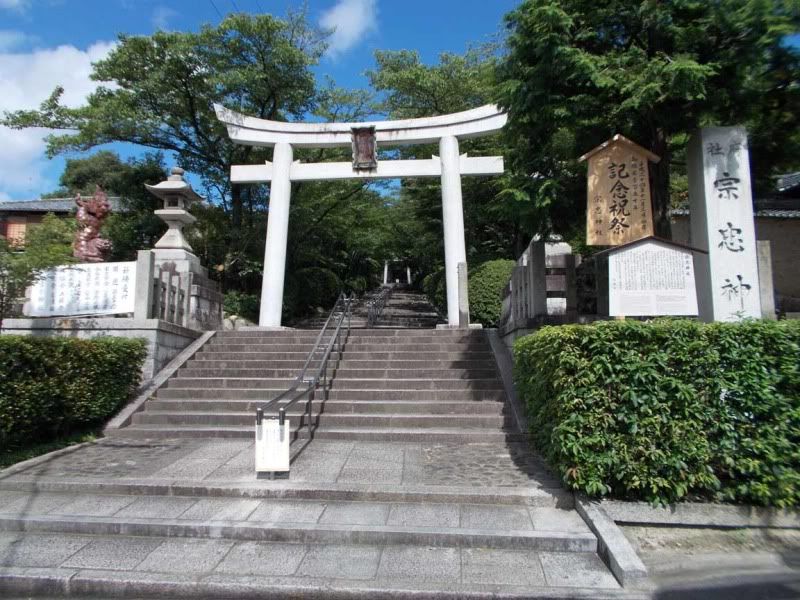
In 1895, as part of an industrial exhibition to mark the 1100th anniversary of the founding of Kyoto, an immense (but still scaled down from the original) replica of the great hall of the Heian era Imperial Palace (794-1185ish) was built to showcase the new Kyoto. Like many elaborate constructions built to impress (think Eiffel Tower, here) it developed quite a life its own. Its shrine was originally dedicated to the first Emperor to reign in what would become Kyoto, and in 1940 it finished the job by also adding the last Emperor to reign there. Mainly this put the point on the notion that with the symbolic return of power to the Meiji Emperor, the old Imperial Era was Kyoto's era, the Emperor moving away be damned. That grand statement of civic pride by a city that had taken such a blow to it's collective ego is wonderful to behold, and is quite fitting because to a large degree (and quite in keeping with the changing world of Shinto in the Meiji Era) what was really being worshiped at this shrine was the community itself. Simply, the Heian Jingu Shrine is a shrine dedicated to the people and spirit of Kyoto. And its a darned nice shrine, at that. Even if it is just a baby by Shinto standards.
The massive entry gate shows two things. First, comparing this entry to the gate structures at Buddhist temples (like the Sammon at Nanzenji) just how intertwined the aesthetics of Shinto and Buddhism had become. And Second, that the builders of this shrine intended to make as big a statement as possible about their city and their national identity. Remember, this project was from the same era as the canal, and its purposes were very similar. It reflects the growing power of the new urban elites and commercial class. It is the new nationalism. Starting in the 1870's Shinto shrines were separated from Buddhist temples and declared property of the central government. Citizens were required to register as parishioners of their local shrine and shrine priests became government officials. Shinto, being seen as the indigenous belief of the Japanese people, was viewed as a force for uniting the people behind the new, rapidly modernizing state. This actually was a decent fit (for better or worse as later events were to transpire) because Shinto had always been a very communal institution. It certainly helped that it had a very unstructured hierarchy that was less likely to oppose the emerging state than, say, the Buddhist temples and their entrenched power structure. This all came to a head in the rampant and rabid nationalism and militarism that would eventually lead up to the Second World War and its messy aftermath. But oddly, with the disestablishment of State controlled Shinto and the de-deification of the Emperor at the end of the war, the shrines quite easily adapted and quietly drifted back into their traditional place. Reading about how Shinto came out of the era that began with the Restoration and ended with the war, you get the feeling that as an institution it was never really comfortable being front and center anyhow. Almost as if it was shoved onto the stage but really just wanted to go home. Which, in effect, is exactly what it did as soon as it had the chance. The local shrines seem to have a role almost like a neighborhood association, and the larger shrines are like community centers. Heian Jingu in particular still has a strong connection to the civic leaders and commercial class that was largely responsible for its construction. Its a cultural institution, clearly seen in the fact that clustered around it are municipal museums and the zoo, as well as part of the city's commercial heart with its wall of offerings of sake casks donated by the community and businesses for continued good fortune.
But perhaps nothing expresses the civic nature of Heian Jingu better than its gardens. Unlike traditional Shinto shrines which venerate nature and therefore tend to let the surrounding environment be, or Buddhist gardens which are fairly complicated and ordered affairs, Heian Jingu's garden is more like a modern botanical garden. Its a walking garden, more park than statement. Park-like, it has little monuments to the era from which it sprang, like one of the old trolley cars originally powered by the electricity provided by the Lake Biwa Canal.
Strolling along neat paths past little labels identifying the various flora and foliage, its very reminiscent of Western style gardens. A visit a few years back to the Missouri Botanical Garden (started in the late 1850's-1860's, so kinda contemporaneous and definitely representative of this modern concept) in St. Louis comes to mind, possibly because it has a wonderful Japanese garden, but also possibly because even if you know nothing of plants, shrines, Emperors or St. Louis they both are really just nice places to...well...be.
Of course, that's not a coincidence. This notion of a public space, a space for anyone's leisure, is a modern one when you think that most large gardens before this time were only to be found in the palaces and estates of the upper classes or in the sequestered confines of religious spaces. Kyoto and the Japanese were like sponges at this time, soaking in as many modern concepts as they could. So it shouldn't be surprising that this modern concept of the park is to be found at a place so representative of its time, like Heian Jingu. It is a lovely garden, and well worth a visit, especially on a warm, humid day when strolling through its lovely shady paths is as refreshing as a cool drink of water. Plus, it has a stepping stone walk called the "Bridge of the Lying Dragon" built from slices of 400 year old bridge pillars,
where I may have kept the camera on Holly because, she being a klutz, there was the possibility she might fall in...not saying I really expected it, or was preparing to laugh uncontrollably if it did happen...just that I may have been thinking it.
But sadly she was surefooted as a cat. And I think that brings us to a perfect break point, so I guess I'll leave it there for now.

Monday, September 17, 2012

"Breakfast With Divyam and Yasuko" Would Make a Good Morning TV Show

The crazy previous day had actually been pretty darned helpful. With no real sense of scale gained from the taxi ride to Yonbanchi, places on the map that had seemed a good distance away were brought into perspective. As it turns out, the part of Kyoto we were in was quite compact, and even the furthest things we wanted to see were well within easy biking distance. That afternoon's semi-lost scramble had been good for allowing us to see exactly where the hell in relation to everything we were. Feeling rested and a bit more ready to roam around, we headed downstairs to see what Divyam had in store for us this day. After the positively enormous feast the previous morning at Teiseikan, breakfast was a refreshingly light mix of wonderfully fresh fruit (some I had never seen that were of decidedly alien appearance), jams and marmalade, all washed down with thick strong coffee. It was definitely a meal designed to start a busy day. As we sipped our coffee, the morning briefing began. First, we gave a report on the previous days activity (I believe we received a C+), then it was back out with the maps and the real work commenced. Divyam was concerned. Between the things we hadn't hit the day before, the couple things I wanted to do, and the things we needed to hit today it was possible we would need to pull a late night to fit it all in. Oh well, "don't forget to get lost" and we were again cast into the street. We decided to ease into the day in a manner our host would allow, so delayed jumping on the bikes right away and walked up to the end of the street to take a stroll through the grounds of Yoshida Shrine.
Yoshida is part of the fascinatingly complex Japanese relationship with religion. If you are looking for a single topic that could be used to chart the evolution of the Japanese people, there is none better. Deep breath....out of the misty haze of Japans prehistory, through its complex relationship with mainland Asia, the first contacts with the west, the history of its ruling family, the birth of the state, the enormous societal changes that came with the arrival of Commodore Perry, the relationship with America it brought, the fall of the Shogun and the Meiji Restoration, nationalism, the rise of militarism, WW2, modern Japan, (whew!) all are intertwined with the history of Japanese religion. It has been a centuries long give and take, with one shaping the other and vice versa. Religion has been a reflector and director in Japanese society. And to put it simply, its everywhere. There are nearly 100,000 Shinto shrines in Japan, and lord only knows how many Buddhist temples and sub-temples. For a nation's religion to be that omnipresent, you would think that would make for a very openly religious people. But there can be no more stark contrast between how different cultures interact with religion than to compare it to America. Here, you can't watch a post game interview, a news broadcast about a natural disaster, or a political campaign without tripping over religion. People's religion in this country is not just worn on a sleeve, but waved like a banner. In Japan, most would likely describe themselves as non-religious, or mostly secular. But that is skewed if viewed by our standards. Religion, to some degree, is the culture of Japan. Its more normal, you don't trumpet your faith to the world. The difference between someone who believes, kinda believes, and doesn't believe is a grey area at best. Throw in the odd subtleties of Japan's religions and things can get even grey...um...er. This is because many aspects of religion have an almost purely secular purpose, where the culture to which you belong is what you are worshiping, not a deity. Particularly since the Meiji restoration (but certainly rooted much earlier) it has been central to the concept of Japanese Uniqueness (an actual defined concept, though the term itself is a post-war one). Its part of the social fabric that has allowed Japan to define itself (for better or worse) in its own eyes and within outside perceptions of the Japanese, particularly by the west. In short, the changing nature of religion in Japan, specifically with regards to Shinto, is the story of Japan, and its a very fascinating one. I am trying not to go on too much, here (failing, perhaps), because the topic has filled many books by people far more knowledgeable on the subject than myself, but so many of the images you are likely to see on this little travelogue (even ones seemingly unrelated to that cultural heritage) relate back to those themes. Any attempt to put them in any context, even in my own mind, requires a modicum of understanding of these issues. And since we are currently at the Yoshida shrine, lets jump right into Shinto, shall we.
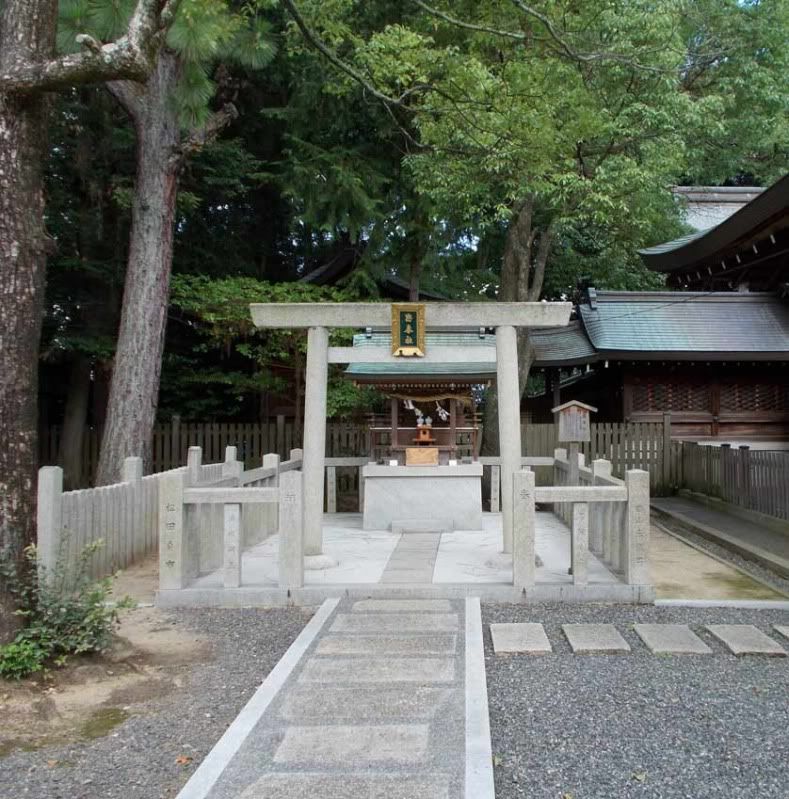
Shinto is usually translated to mean "the way of the gods", which somewhat clouds things because for the most part we are not speaking of "gods" in the sense of our western, Judeo-Christian or Greco-Roman notions of god-like beings. Shinto is the modern incarnation of the early folk traditions and prehistoric animist beliefs regarding the natural world and the Japanese place within that world. Like many other folk traditions that evolved with prehistoric nomadic populations as they settled down, began farming and started establishing villages and cities, it changed from the worship of the spirits found in the natural processes around you to a religion where you needed to "house" the spirits and gods responsible for those processes. Where Shinto gets interesting is because this consolidation was occurring at the same time that Buddhism began arriving in Japan. Buddhism was already an established, venerable institution by the time it arrived on Japanese shores by way of China and Korea. It brought with it a structured, ordered, doctrinal system of belief somewhat at odds with the incorporeal native spirituality. However, in a process that is uniquely Japanese, the new did not displace the old, but instead facilitated the refinement of the old. One source defines it this way: "Shinto, per se, did not exist until Buddhism gave it a place to be". In fact, a great deal of modern scholarship informs that Shinto did not exist as an independent religion until the Meiji Era, when it was separated from Buddhism for completely non-theological reasons. Whatever, the ancient folk traditions combined with early Japanese Buddhism and the end product was the "modern" Shinto shrine. Despite the enormous diversity in types of shrines, mainly dependent on the time they were established, their presence is always announced by a Torii gate (though of unknown origin, this is likely of mix of Buddhist architecture with native shamanic structures), traditionally marking the beginning of sacred ground. Due to the very naturalistic background of Shinto, the shrine can be a large structure, or a small enclosure with a little representation of a storehouse for the enshrined deity,
or it can enshrine an aspect of the wider natural world itself, such as a sacred grove, a significant natural feature, or even a hillside or entire mountain.
However, the oddly syncretic nature of Buddhism/Shinto and its shared melding of heritage and symbology is usually quite visible, as seen here with a nice lovely torii and its sanctuary flanked by stone Toro lanterns, which are representations of the 5 Buddhist elements with the base being earth, followed by water, fire (traditionally a representation of the Buddha), air, and void.
Some symbols are more representative of the more temporal connections Japan had with the world, for example the Komainu, or lion dog, traditional shrine guardians. Though specifically of Chinese origin, brought by way of Korea (some sources specifically refer to them as "Korean Dogs") they are more an example of the wonders of the portability of ideas along the Silk Road. With the mouth of one slightly open pronouncing the syllable "a" and the other with it closed pronouncing "um", they are as a pair speaking the Sanskrit "aum" representing the beginning and end of all things. So a people who had never been within 2000 miles of a lion, and likely never visited China nor heard Sanskrit spoken, guarded their local shrines to their native spirits with a Chinese image brought from Korea of an Indian or Persian lion speaking an ancient Buddhist word that relates to a concept still common in modern Buddhism and Hindu belief. Take that, globalism.
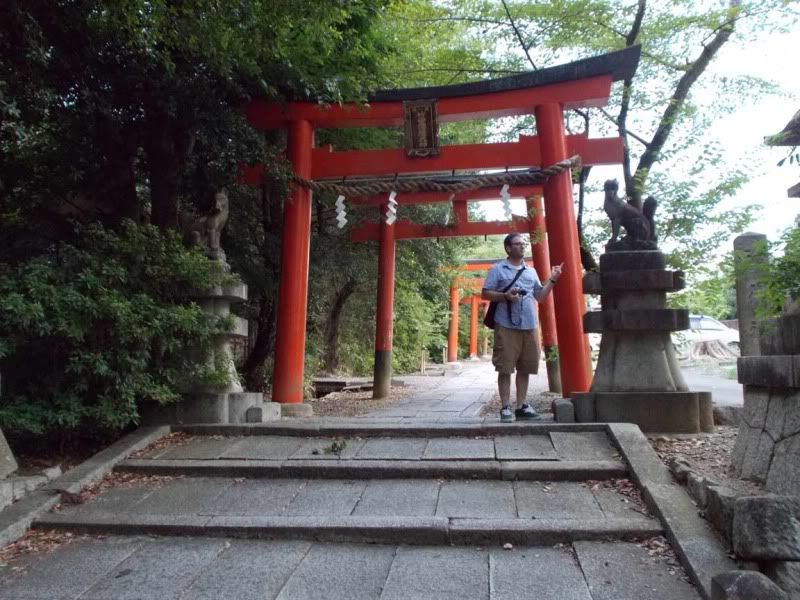
The Japanese even took this a step further, mixing in their own folk traditions as they saw fit. Sometimes the guardians are deer, sometimes monkeys, at one shrine in Kyoto its rats, but often its the fox. There was a long tradition of foxes and fox spirits within their folklore. This homegrown tradition became mixed with foreign folktales (and, once again Buddhism) to create the kitsune, a distinctly Japanese version of the komainu linked to the god Inari, and therefore usually seen guarding the entrance to any of the some 30,000 Inari shrines around Japan.
Inari him/her/itself is an interesting figure, likely being a Buddhist deity placed on top of an ancient native spirit(s). Depending on the region and the shrine, he/she/it is possibly male, female, androgynous, a snake, a dragon, with foxes as messengers, or a fox him/her/itself, maybe a mix of 3 or 5 deities, a patron of blacksmiths, rice, farmers and worldly wealth... likely no Kami better represents the fluidity of Shinto. And if you need more evidence of the odd nature of Shinto and its rather wonderful "come one, come all" nature, its notable that all the images used as examples here were taken at Yoshida shrine. Oh, we also found the following cryptic icon, but I can't find it's heritage. Probably Buddhist as well.
In the Japan of today, the one we briefly visited, Shinto is just...kinda...there. By its nature it doesn't intrude into peoples daily lives, its very polite. Much like the Japanese themselves. My favorite description of it is this: "Unlike Buddhism or Christianity, Japanese Shinto has no founder, no sutras, no body of law, no closely knit organization or priesthood. There is no Shinto heaven or afterlife, no orthodox moral code -- only the social etiquette of the community and some ideas borrowed from Confucian philosophy. The Shinto universe is amoral and indifferent. Virtue is not always rewarded, nor is evil always punished.....Emperors and rulers may come and go, but the Japanese people and their nature will remain constant. All life forces have rough and gentle natures, all are demanding and then forgiving. The underlying nature of the people does not change, the underlying "nature of nature" does not change.It is so positively not a pain in the ass it is truly refreshing. If only all religions could be that unassuming. Which brings us to Buddhism, which I'm not really going to go into here because I think one religion per post is about the right amount. However, leaving the Yoshida Shrine and jumping on the bikes took us to the next spot on our Divyam approved to do list, and away from the Shinto world and solidly into the world of Buddhism. 
The Silver Pavilion, Ginkakuji, is a good example of how Buddhism got into a bit of trouble on occasion. Having more structure than Shinto, it was more intertwined with the political and intellectual elites, as structured religions often are, which meant its fortunes rose and fell and doctrines changed and splintered off with the political and intellectual tides. More on that later, back to Ginkakuji. It was built as a retirement villa/temple for Shogun Ashikaga Yoshimasa, who would sit within and contemplate...things...as Kyoto burned around him in the late 1400's.
Because of all this, the temple/palace has a much more administrative/luxurious look to it
The overall attitude is more aimed at the notion of calm and order through control, but its likely contemplative is the word I'm supposed to use. Probably nowhere is this attitude more visible then in its application towards nature, although landscape architecture is a better description. Where the Shinto perspective was a veneration of nature as we exist within it, this is more an attempt to exemplify an ideal outdoors. It's the extension of a modern concept of nature that stems from a society built around cities, rather than the folklore that survived as the farmers moved from the wilderness into cities. It was amazing to see the gardens around this and other temples, where entire hillsides would be turned into meticulously manicured constructions of moss, rock and water. It certainly is impressive, and being the contemplative type I'm considering something similar for my backyard. Though anyone who's seen my backyard or is familiar with our lack of "meticulous" or "manicured" will likely know how that will turn out.
One of the best parts was getting a nice birds-eye view of our 'hood. The leafy green hill in the middle ground is Yoshida Shrine
Having gotten all Zen with our bad selves, we were back on the bikes and off along the Tetsagaku no Michi, the Philosophers Walk, named after the 20th century philosopher Nishida Kitaro who apparently lived nearby. I tried to find out a bit about this Nishida, and why he would get a leafy canal-side path named after him, and found philosophy speak to be completely impenetrable. Although I can't speak much to the virtues of "contradictory self identity" I can say the Philosopher's Walk was lovely. This used to be the outskirts of old Kyoto, and as such is pretty heavy in the temple and monastery department, which is good because it makes it a good place to try some temple food. This was especially good because Holly chose to have an "eat...now" moment right in front of this place
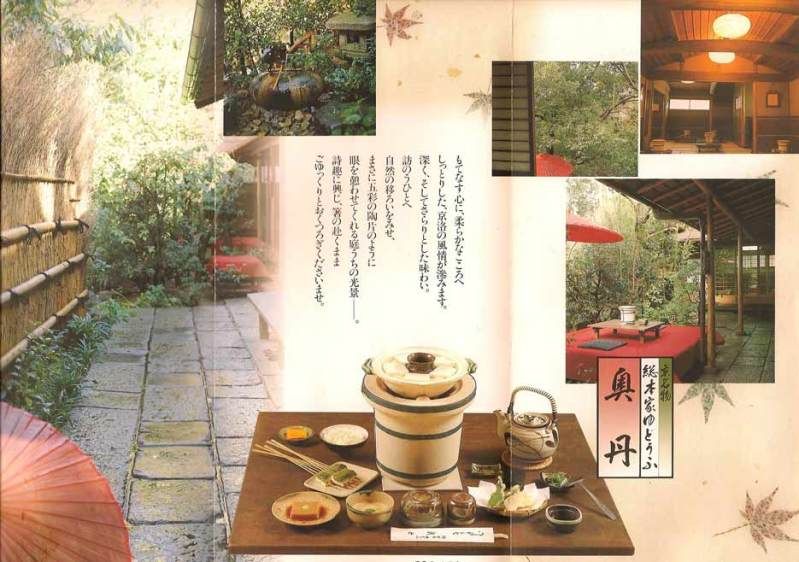
Delicious. It was an entire multi-multi-course meal made up entirely of different ways to prepare tofu. To be perfectly honest, I think they were showing off. After all, I'm not sure the world needs that many ways to prepare tofu, but they were all incredible so I'm not really complaining.
Properly fed, it was time for more Buddhist stuff. This was Nanzenji, part of a large complex of Rinzai Zen temples that fills up most of this area. This is the path leading to the Sammon (main gate) built 1628 as a war memorial of sorts. Also, apparently some particularly notorious thief was captured here and then boiled in a large iron cauldron...hmmm.
One of the many things that fascinated me about Japan for many years was their history of woodworking. It was exciting to actually be able to see some of this work first hand. These are truly impressive structures, on many levels. The ability to work wood on this scale is incredible to see. It is light in design, yet nearly overpowers you with its scale. Therefore, to show my respect for the majestic structure, I felt posing as a bouncer was the best way to go
Just behind, the Nanzenji Hojo, or Abbots Quarters
The interior,
And I guess I'll leave it there. There was plenty more this day, but even I am getting tired of typing whatever comes to mind, so I'm just going to get to it in next post.

Friday, September 14, 2012

Every Title I Came Up With Sounded Like A Tourism Ad For Kyoto

Holly, the Wife, has a very unusual talent. She seems to have a sixth sense-like ability to find good places to stay on our travels. I'm not sure how she does it, clearly divination or voodoo is involved, because she gets online and the places we NEED to stay just seem to bubble up to the surface. Case in point, Yonbanchi in Kyoto, the house of Divyam and Yasuko. Divyam is a transplant Frenchman that has spent the past 3 decades in Japan married to Yasuko, having fled a currency trader's life back home, passing through India ("India is not a good place to be broke so I came to Japan"). Yasuko's life is no less interesting, her tale beginning in the bleak post war years, crosses paths with prominent American painters and ends with her greatest challenge of all, Divyam. Together the two form a wonderfully maniacal good cop/bad cop team whose solitary goal is to make sure you see as much of Kyoto as possible. Divyam alone is a veritable force of nature. Arriving in the early afternoon in Kyoto by train from Odawara, any notion of being able to sit down, get our bearings, and take it easy were immediately set aflame as we were given a thorough, detailed, and positively head spinning crash course on what we would be doing that afternoon. The orientation involved maps, complex directions, business owners names, where we would rent bikes ("walk? No, you will rent bikes"), locations to park the bikes, and which of the public baths we MUST try that night before we would be allowed back in the house.
With a smile, a wave, and his customary farewell of "don't forget to get lost" we were cast out onto the street to go get the bikes we were to rent for our stay. Holly and I blinked in the bright, humid, Kyoto sunshine and trudged down the hill to the bike shop. I was given a standard bike, but Holly was required to rent a fancy thing with a high tech electric assist facility; not an electric powered bike, mind, more of a passive system that kicked in when needed, depending on its settings. For some reason the bike shop owner had me try the device, which I found oddly disconcerting, then made me get off and give it to Holly to careen about the streets upon. My test being her instruction, I guess.
 She eventually got the hang of it, but at first it mostly freaked her out. Bikes in hand, we promptly made our first mistake...we returned to Yonbanchi. Divyam greeted us with a look as though he knew we were trying to sneak away from some important task. He was clever, too. "You need the charger for this bike", my response was weak "can't we get it tomorrow", "tomorrow the bike shop is closed", then his mind started working. He must have realized if we went to get the charger we would then have to bring it back to the house, allowing a possible opportunity for loafing. "I'll ride down with you, get the charger and that way you can be on your way". With that, it became clear we had lost this little battle of wills. There would be no lazy American layabouts on Divyam's watch. We were going to become model tourists. "Remember," it was almost a victory cheer "don't forget to get lost!" As it turned out, his energy was far from a curse, it was in fact wonderful. Very quickly we got the feel for the city; where things were and the best ways to get around, though that first afternoon was a bit bewildering. Lets face it, when two yokels used to biking around the tiny town we call home are dropped onto the streets and sidewalks of a city of 1.4 million and required to get the lay of the land at bicycle speed, it can be a little hectic. I had a bit easier time than Holly, partly due the fact I LIKE riding bikes through crowds, but equally because she was still on the bottom of the learning curve with her infernal not-quite-motorized device. Added to that, we hadn't eaten since our enormous breakfast that morning way back in Miyanoshita. Holly's contribution to our choice of dining while traveling is usually "eat...now", which I tend to find infuriating at the time, but has almost never led us astray. It tends to result in us walking into a place rather than roaming about endlessly looking at menus and discussing options. As it happens, this was a good example of that phenomenon. We had been headed further downtown, but instead I pulled us up at a streetside yakitori stand. The seats out front were full, but I thought I had seen tables around back, and was promptly beckoned to sit, always a good sign. The "dining area" was under the carport for the apartments behind the stand and beside the small metal hearth where they were roasting small pieces of wood to make the charcoal to cook the skewers. Provided with beer, cabbage leaves and dipping sauce as an appetizer, a xeroxed order sheet and a pencil, it was immediately apparent we were in the right place. On the sheet, next to the offerings in Japanese, Korean and English was a space to mark how many skewers you desired of mushrooms, chicken livers, asparagus, chicken hearts, chicken cartilage, green peppers, chicken skin, beef tongue, and.....chicken (so oddly not listed as being from a specific part of the bird it left you wondering what it was). And it was DELICIOUS. Cooked over the very charcoal we watched getting made, I couldn't think of a better welcome to a strange, new town.
You may notice in this pic I'm drenched with sweat. It was sooooo, damned humid. I must reiterate an earlier statement: August is NOT the best weather month to visit Japan. If you're used to Florida's weather this time of year, add on a few extra points of humidity and you've got an idea. We would eventually learn the tricks to going about your days in the warm bathwater that passed for air without looking too disgusting or passing out, but it should be pretty clear that had yet to happen from these first pics.
Anyhow, satiated with the things that make life good: beer, grilled vegetables and random chicken and cow parts, it was back on the bikes and further into the city.
We ended up on a street lined with restaurants and clubs and began to be aware of a phenomenon we would later encounter quite frequently. Between about 5 and 8 there is a weird "hole" where its no longer bustling daytime activity, but the dinner and evening activity hasn't started up yet. Streets get very quiet and a lot of places have a "not open yet" look to them, then suddenly there are people everywhere and the night shift has started. You can drop into a place on an empty street, then walk out an hour later and it looks like a carnival has started up. At first we were nearly alone, but soon we were joined by half of Kyoto for an evening stroll and a drink. I wish I had a pic of this street not half an hour later, it was shoulder to shoulder.
Passing a little tapas joint, of all places, we decided to pop inside, though mainly fueled by Holly's need for a bathroom. Over port and more tasty vittles we debated whether or not Divyam would allow us in yet. We were knackered so decided to brave it. On the way back, glancing down a side street, Holly spotted a Guiness sign. Perhaps afraid of returning too early we decided to investigate and found Sheep's. It was a jolly little place with good beer, food if we hadn't been stuffed, and Olympic Women's soccer on the TV. However, we were getting well and truly tired, so finished our beers and jumped back on the bikes. At the house, though disappointed we hadn't fit in a trip to the baths, Divyam allowed that we had accomplished the bare minimum to be granted access to our beds. With bellies full of goodness and 23 pounds of sweat lighter, we were amazed it was just the end of our second day. Our arrival at the airport the previous morning seemed so long ago, not surprising given we had barely stopped moving since arriving. So with dreams of grilled chicken parts dancing in our heads, we sleepily looked forward to our first full day in Kyoto.