Saturday, November 17, 2012

Super Fun Nerd Time, GO!!!

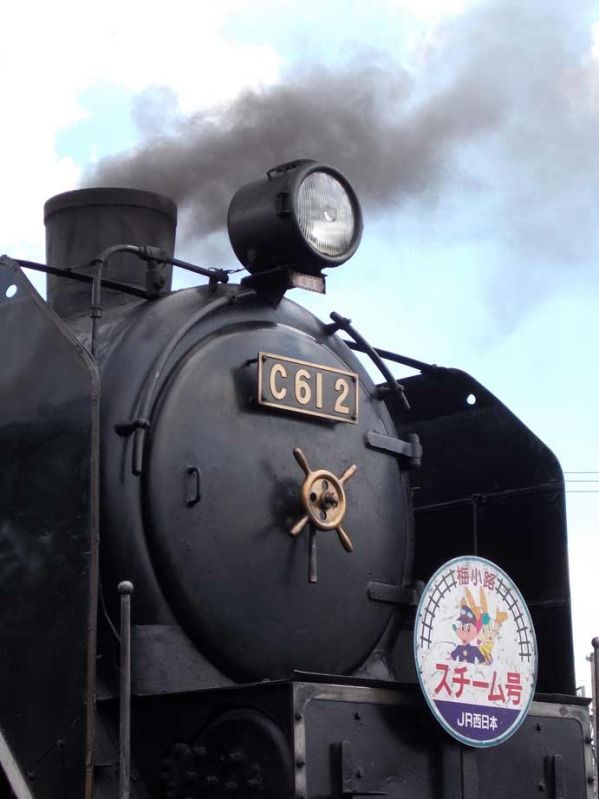
Take a moment to pity Holly, the wife. She has patiently been dragged to all manner of horribly educational places because of me, her husband, under the guise of going someplace nice, like Charleston. She can eat, drink, and see all the nice houses she wants, so long as I get to see the Hunley and Fort Sumter. Don't pity her too much, of course; after all she did have a choice in the husband department and likely thought marrying me was a good idea at some point. Also, I haven't subjected her to some of the really evil ones, like Sloss Furnaces; and on the plus side, Fort Sumter does involve a nice scenic boat ride to get there. My long suffering brother has actually had it worse; Holly just has to put up with me, he had to put up with me and my Dad. At a time he was beginning to think about gurlz and other such things important during your formative years, he instead was being dragged all around the United States visiting innumerable ghost towns, mining museums, and train museums. The first two probably weren't so bad, because they were usually located in scenic mountainous parts of Colorado and he could at least pretend he was there with a pretty lady instead of two dorks talking about mining equipment; but the last...well, there's no way you are going to enjoy a train museum unless you just really like trains...or are a kid, at which point liking trains is kinda automatic. I really like trains, always have; love 'em, in fact. From a very young age steam engines were the pinnacle of human achievement to my eyes. I had model railroads, but to be perfectly honest they weren't enough, they weren't actual steam engines. I like big, noisy, smoke belching locomotives. Period. I was pretty sure Holly had no real opinion about trains, not that she doesn't like them, but an ambivalent attitude towards trains at a train museum very quickly turns to boredom. I had seen this happen to my brother many times. There was no helping it, though, there was one place poor Holly was getting dragged in Kyoto and there was no way in hell I was going to miss it: Umekoji Steam Locomotive Museum.
If there's one thing Japanese history will tell you its that the Japanese are very quick to spot a good idea and get on with it. Trains are no exception. Trains weren't particularly old by the time of the Meiji Restoration, but they had come a long way in the century and a half since the introduction of the first practical working steam engines, ones that weren't laboratory curiosities or nifty toys. Primarily, they were built to replace horses, so it should come as no surprise, therefore, that engines to this day are rated in "horse power". You would think a horse is a fairly cheap thing to have running your machinery, but this is not in fact true. Horses need to be fed, they usually need a person or few to take care of them and make sure they are applying power where, when and how its needed, and in the end you are still relying on something as fickle as a living thing to reliably and continuously provide power. The first engines were built to do the tasks that needed to be repetitively and reliably accomplished, pumping water, blowing air, running a large quantity of other machinery.  Men being men, it wasn't long before someone looked at a steam engine and said, "I bet that would be awesome on wheels", and the locomotive was born. Key to this process was a man named Richard Threvithick, he advocated the use of high pressure steam engines and had a tendency to build an engine for some purpose like operating a mill, but before installing it would throw some wheels on and run it around on a track, or down the road, or to a pub, really. These early engines weren't very efficient and were still compared to horses, even being routinely put up against horses in head to head competitions like races an' such. This may all seem rather pointless and unrelated, and perhaps most of it is, but Richard Threvithick, Father of the Locomotive, is important to our story for one more reason than just that achievement, he had a grandson also named Richard who we will come back to in just a little bit.
In the years immediately following the Restoration, the Meiji government sent citizens, tradesmen and professionals all over the world to learn what they had missed in the years the country was closed. Some were sent to schools all around the globe to learn about modern concepts of science, math and engineering; others were sent as ambassadors to represent Japan's interests and learn about other forms of government; and another group was sent on a mission to visit America and Great Britain and learn about this "industrial revolution" thing everyone was talking about. When they returned, they brought the message that for Japan to be able to compete, or even just survive, in the modern world it would need to move from an agrarian based economy to one built on industry and manufacturing. What was really at stake was an attitude that to be able to achieve a position that could free them from unequal treaties and the danger of foreign pressure and influence, they needed to be seen as a country on par with the West. Modernization was not just a means of improving the nation and the lot of its citizens, but a necessity for preserving the nation as an independent institution. This is why the leadership dove into the process with such zeal, and why those underlying fears allowed the process to be easily hijacked in later years by Nationalists and Militarists. That future would have been irrelevant, of course, if the Japanese hadn't been able to so dramatically change the nation's course in the immediate aftermath of the Restoration. What is amazing is how quickly they pulled it off, and the railroads are a great example of how well they did. In 1868 there was nary an inch of rail in Japan, yet the first scheduled rail service began just 4 years later. Through fits and starts and the work of public and private rail companies by 1889 there was 1600km of lines, 3000km by 1893, and 7600km by 1906. At first, everything was imported: engines, rolling stock, rail, everything. This even extended to the engineers, conductors, and machinists to run and maintain it all. These people were not brought over to stay, they were brought over and paid well to teach. Japan would not be contracting out its own industrial revolution, that would have put them at the mercy of the foreign specialists. Instead, the Nation would move into the future with the help of those that had already learned the hard lessons about the newest technologies and then the Japanese would step in as they absorbed those lessons. Many things the Japanese trainees picked up remarkably quick, but locomotives were, at the time, some of the most complicated machines in the world and required far more practical and precision engineering skill than a train carriage. Despite the fact that large scale mechanical engineering did not exist in the country just a couple decades earlier, nor had any Japanese so much as seen the equipment needed to make such things, even that hurdle was rapidly surpassed. The first tentative steps involved modifying imported engines for different tasks, but eventually attempts were made to build an entire homegrown locomotive. In the "its a small world" department, this is where the grandson of Richard Threvithick (Father of the Locomotive, as you may have heard) re-enters our tale. Of the many Britons that went to Japan under contract was Richard F. Threvithick, and it was under his supervision at the Kobe Works that the first Japanese engine was built in 1893. That first engine used castings and components imported from England, but soon entire engines were being built under the supervision of the grandson of the inventor of the locomotive. Hell, get the best I say. Engine technology would grow by leaps and bounds from that point, the Japanese learning about the latest advances from America, Germany and England and then building their own engines, and it wasn't very long before they were looking very modern indeed.
Umekoji was opened in 1972 as part of a celebration to mark 100 years of Japanese railroading. Located not far from modern Kyoto Station, it consists of two main buildings. The museum proper, the old Nijo Station, was built in 1904 and moved to Umekoji in the late 90's. Its chockablock full of stuff, a good proper lot aimed at kids, as it should be, but there's a good selection of live steam models and railroad brickabrak like a coal shoveling trainer, which woulda been fun to get Holly to try (its also got a decent gift shop where I got to buy my very own N-scale D-51). The other main building is the old roundhouse (or "Fan Shaped Locomotive House", as the brochure calls it) which houses all the museum's engines as well as a large variety of big kid nerd artifacts from the heyday of steam, like sectioned displays of engine components and the patterns used to cast them. Cool stuff. There's also usually an engine under steam that you can take for a short ride, and as soon as we arrived were informed it was about to depart so we should go get tickets.
As train rides go, well, its sorta short which isn't too surprising considering its located in the middle of a modern train yard. Pretty much, the engine reverses a couple hundred yards down a piece of track, stops, there's a short talk in Japanese about rail history which for some reason inexplicably ends with the theme song to One Piece, then its back to the station. But hell, whaddya expect for 200円.
Anyway, that's just fine. I would prefer if it really got to stretch its legs, but an engine under steam is an engine under steam, and there is just nothing that sounds, feels and smells like it. I'm normally pretty reserved and considerate in museums, but when I get around trains I get a stoopid grin and revert to my 12 year old self; snickering and getting too close to exhibits, steaming up the glass display cases and getting scolded by museum staff. Except not here, Umekoji is absolutely top notch and is staffed by friendly and enthusiastic people who seem to get a kick out of anyone who has a genuine interest in trains.
Honestly, to me it was a bit unexpected that Umekoji exists at all. In a country that puts such an emphasis in modernity and progress, it actually came as a bit of a surprise to find out there's a fairly dedicated and established rail history crowd, and there are actually a decent few museums and tourist lines running old engines. A large part of this is due to that fact that a good number of these engines ran well into the 60's and made it to the era of a growing awareness of the importance of preservation.
And truly, aside from my love of steam engines, there's good reason to preserve these archaic contraptions and what they accomplished, especially in Japan. In the times before the Restoration most transport was along the coast, by sea. Despite being master builders in wood, the Japanese were never very good at building roads or bridges, so given Japan's topography overland transport of people or goods was difficult at best. This was fine in the late Tokugawa Shogunate, because the government didn't want too many people moving around on their own and they were more than happy to control the coming and going of trade as much as possible. After the Restoration, however, the trains changed all that. With the coming of the knowledge and ability to build the railways, engines and cars, came an ability for people to move around, for whatever reason. This was radical stuff. For centuries you and your family would be born and die in the same place. Going somewhere was a concept very few people got to experience. The trains also changed and improved life in myriad other ways. In bad times the trains eased food shortages, because you could easily move resources from places with surplus to places stricken. In good times it meant you could ship your surplus to a greater variety of markets and buyers, and a greater variety of goods and materials were available to you. It meant labor for the new modernizing society could be more fluid, people could move off the farms to the cities to work in shipyards and factories or move from one city to another to find a better job or education. In many ways the railroads were a greater unifier of Japan than the Shogun or Emperor, allowing the spread of a common Japanese experience in a way never before possible. Not that it has been all smooth sailing and glamorous travel, of course. There were fights over nationalizing the railroads, the role of private "light" railroads, and of course the intense disruptions caused by the Second World War. Even when back on a solid post war footing, led by Allied reconstruction and a return to quasi-public control the railroads have had a challenging time in a changing world. Cars and planes have been a source of competition to Japanese rail just as they were here in the States, but not quite to the extent that they drove the trains to extinction, as happened to virtually all rail traffic outside of our city commuter lines. But even as the country moves through another time of transition, the trains still suit Japan, and are something the Japanese can rightfully be proud of. As much as any of the other symbols and artifacts of Japan's continuous forward progress, the trains are perhaps the only ones you can still use and not just venerate. That's why the rail heritage is important; its a chance, perhaps, to pause and take a look back at the breakneck pace of change over the past 150 years, its relevance underscored by the Shinkansen that rolls by every few minutes. I ended up with a couple other guys watching the museum crew retubing a boiler. Holly was nowhere to be seen, the others guys seemed to have abandoned their families to the AC'd museum as well. To a certain extent there was no point watching a boiler being re-tubed, its a lengthy process and just one of many steps to getting an engine restored. Its not like the crew was gonna wrap it up and take the engine for a spin in the next 20 minutes. It was more about watching these guys who get to do this all day, saving something important, playing with trains. Its the ultimate little kids dream. It was mine. Perhaps there was a touch of envy watching those guys, and that's okay, I'm still just a little kid when I get around trains. To look to my side and see a couple Japanese guys like me just intently watching, probably wishing that could be their job, too...that in itself was worth the trip to Umekoji; but to be a grown-up, and watch actual little kids run around these big wheezing dinosaurs and remember what it was like when I saw my first train, that was almost worth a trip half way around the globe, right there.


Wednesday, November 14, 2012

Its Best to Follow a Post on Religion with Politics

Our next stops were going to be scattered all across Kyoto and involve a whole bunch of pedaling. With our bellies full of another tasty breakfast and our heads awash with Buddhism and shrines it was time to jump on the bikes and get a move on. The first two places we were going to hit, after biking through the gawdawful, peasoup thick humidity that was already rearing its ugly head, were representative of a big change in the leadership of Japan. Nijo Castle and Kinkakuji were the first destinations, but we kinda hit them in reverse chronological order, so I'm gonna deal with them in historical order rather than the order we saw them on our little visit. Aside from just being built 200-odd years apart, they are from completely different worlds. If combined with the previously visited Ginkakuji, the three structures mark a clear line between the Classcal Japan and the birth of the modern nation. Why this great transition? Its all because of sex. Yes sex is a driving, dynamic force for social change and don't let anyone tell you otherwise. You see, when two people have sex, well, you end up getting more people. Its kinda a funny thing. Usually if you want more of something its a whole lotta work, but in the case of people all you need is two of 'em with relevant parts sharing the same overlapping geographic location. This is simple stuff, and if you don't follow me, ask a grown up to explain it. Anyway, you have a bunch of people having sex and soon enough you've got the central authority divorced from countryside, shoguns, the Onin War, Ginkakuji, the old order falling...its a mess. But we're getting ahead of ourselves, here. It all started because if there's one thing the nobility particularly likes to do, its have sex. As a close corollary to the above overview of this sex thing is that the aftermath of a lot of nobles having sex is you end up with a lot more nobles. One example, Emperor Saga in the 9th century, had nearly 50 children by 30 wives. This was a problem in early Japan because given the centralization of power and the rigid rank based stratification of the ruling class, that means you have a lot of nobility running around with very little to do. Can't have a Yamato noble doing the plumbing is what I'm saying. The solution was to demote large numbers of royal nobles. These demoted royals, their opportunities within the court limited, tended to move out into the countryside where a great deal of the day to day running of the country was contracted out to them. This contracting out of tasks had been going on for some time; beginning as far back as the 7th century the Imperial house had become consistently further removed from the country and people it ruled. It relied more and more on elite clans to rule and enforce policies of the emerging state. This outsourcing had created a sort of "noble beauacracy" that used the legitimacy of the legal framework created by the Imperial House to establish a new social order. At first these were clans closely linked to the old classical establishment, but as new noble classes began to establish themselves on the land that actually created the wealth of the state, the order began to shift from the court to the countryside. By nature, these new country lords were destined to cause problems. With so many clans all related back to an Imperial origin the desire to achieve supremacy was too great, and there was near constant low level fighting. These conflicts were still fairly small, often just a few score mounted troops, but sometimes rising to the level of actual battles, usually in the times of disputed Imperial succession or when some of the larger more powerful ruling clans decided to really have it out. But change was coming, and coming fast, and our second stop this day was almost the punctuation for this old era. Indeed, the last heyday of the old Classical order is well represented by Kinkakuji, the Golden Pavillion.
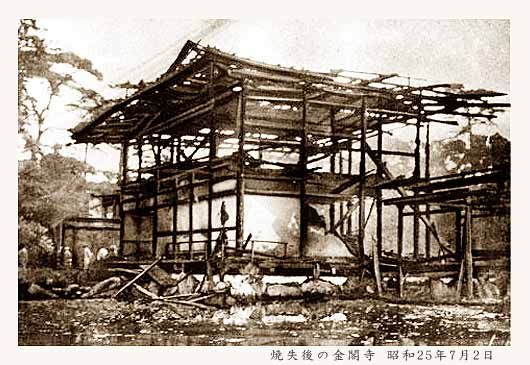
Like many historic Japanese wooden structures, the Pavilion you see today is a reconstruction, dating to 1955.
The original was built in 1394 (or '97, my sources list both dates), and survived all manner of the usual disasters, including when the rest of the compound was torched during the city wide strife of the Onin war...until 1950 when a deranged monk burned it to the ground.
The Pavilion is usually packed; we had been warned to go early or late to avoid the crowds. It certainly was well attended when we were there, and you are kinda herded through: go here, take your picture; now go this way, walk through the serene garden with a few hundred of your new friends; now buy some souvenirs, get some ice cream; goodby. Its worth seeing, no doubt, just remember its not likely to be the most quiet, serene spot you're gonna see in Kyoto. But lets face it, it is a ridiculous structure and to actually have to squint to look at it on a bright summer day is a unique experience.
Kinkakuji was built by the Shogun Ashikaga Yoshimitsu (grandfather of Ginkakuji's builder Ashikaga Yoshimasa) as a retirement villa like the later Ginkakuji; and like it became a Buddhist temple after the Shogun's death. Unlike the time of Ginkakuji, Yoshimitsu ruled over the last gasp of the old classical order, a time of relative peace. Relative, that is, to the period that almost immediately followed. His grandson had none of the interest and ability in leadership that the times required, and before he even passed away a fight over his successor rapidly escalated into a pretty nasty civil war called the Onin War. The aftermath of this nasty scrum left Kyoto almost completely devastated, the Imperial house (which had few resources to start with) completely threadbare, and began a period of near continuous warfare that would last almost uninterrupted for a century and a half. I'm not even going to begin to get into this time, called the Sengoku jidai, because it involves hundreds of dudes killing other dudes, and then being killed by other dudes, who are promptly killed by other dudes. In even general histories of Japan this goes on for page after page after page.....after page, um...after page. The only thing we need to know is that the reason why this had occurred is because no matter how much ruling classes may try, they often can't see and certainly can't stop the progress of the world around them, though sometimes they try to stem the tide until there is just no holding it back. Which brings us back to sex. Not sex among the nobility, but the kind that causes entire populations to grow. The shift of power to the provinces under the new country lords combined with improvements in farming techniques, tools, and strains of crops led to the growth of new "provincial" population centers. The upshot was there was more food to go around, creating greater food stability and less people tending to starve to death. This relative increase in the well being of the commoner, the increased range in which they could grow crops, and slightly decreased likelihood of dying before reproducing a few times caused a population explosion that fueled the expansion of the number of towns, villages and cities and the new social structures and economies within them. Even with all the war and strife of the times, the population grew from around 5 million in the 11th century to around 18 million by the end of the 16th century. Though these new countryside castle towns were essentially independent city states, they were commercially connected to a wider power base than the old court, had a broader base of skills and manpower, and the changes in commerce, warfare, and government this caused was destined to wipe away the old order. Armies were no longer a few hundred or few thousand, but massive organs with tens of thousands and later hundreds of thousands of men. They required logistics and a supply apparatus that could only exist because of the new broadly integrated social structure. For a long while there was an uneasy status quo with the rapidly changing society held in check by the trappings of the old Court structure, but it really just took a bit of a shock, like the Onin War, to yank the lid off the simmering pot and allow everything to boil over. This era of warfare affected all layers of society, but didn't cause a complete collapse, and what emerged at the beginning of the 17th century was a unified Japan that was really unified, not the old "unified" nation that was really just a confederated collection of clans willing to pretend to get along only when they weren't fighting each other at the drop of a hat. The ultimate leaders behind this unification, Oda Nobunaga, Toyotomi Hideyoshi, and finally Tokugawa Ieyasu were products of this new population based order. They had a different attitude to power and where it emanates from, and had new ideas of how to sustain it. No longer content to subcontract out ruling to a group of related nobility, they created a centralized beauracratic government and a structured order designed to keep regional warlords from being able to expand their power through military force. One of the many new instruments of change and societal control was the castle reforms, limiting how many castles a vassal could have in his territory, at the same time using the construction of new castles to tie up other vassal's resources. Nijo Castle is one of the products of this program.
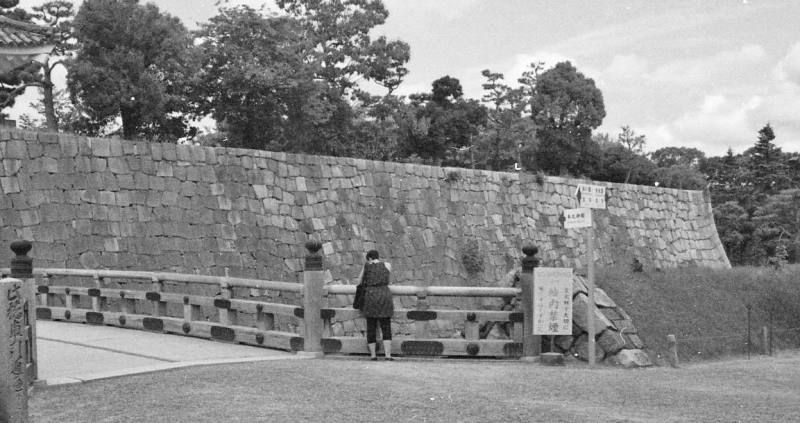
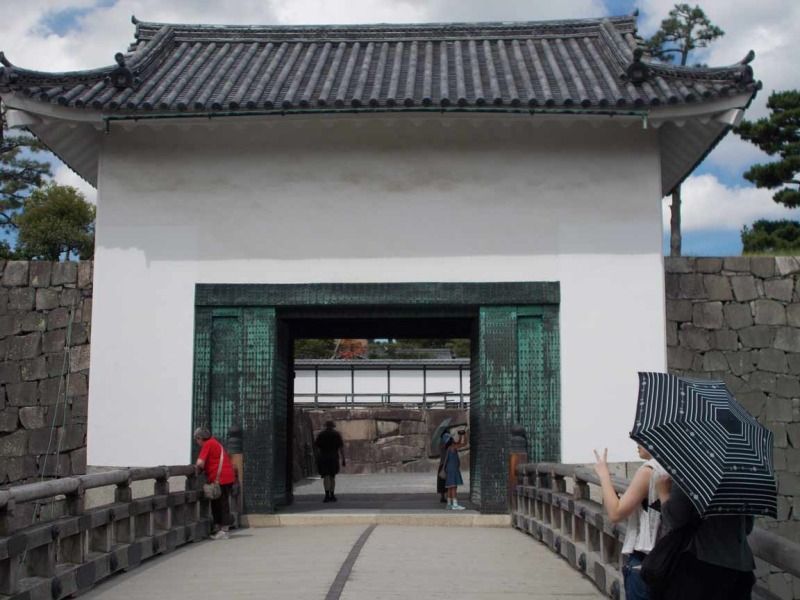
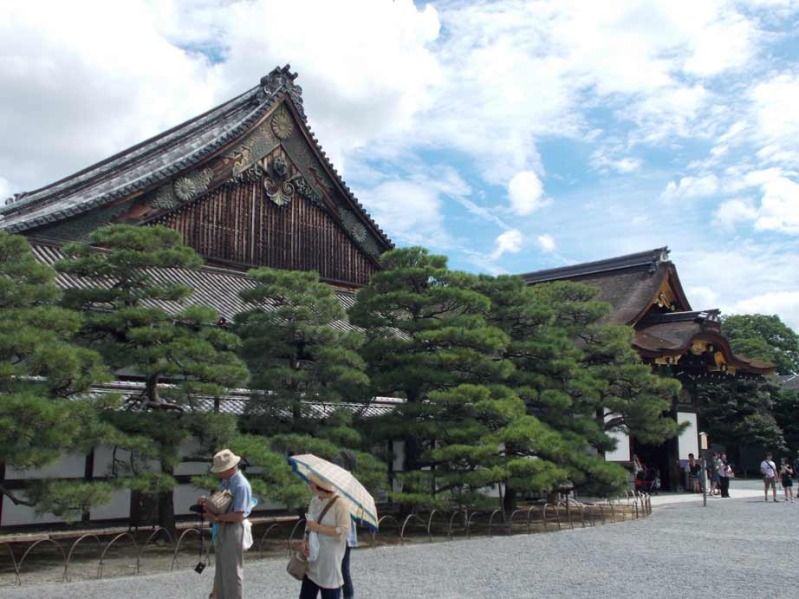
In 1602 Ieyasu ordered the feudal lords of western Japan to construct the castle, which was finally completed by his grandson 20-odd years later. As part of the new restrictions it contained parts from other castles that were dismantled, chiefly Fushimi Castle which donated its five story tower (burned after being struck by lightning in 1750, surprise!). The castle was, in effect, never really used as such. Its main purpose was to be just down the street from the Imperial Palace and right in the heart of Kyoto as a symbol of the new Shogun's power. Its tower was as much for letting the city know it was being watched as it was to defend against any real attack. It was from here that the new era of the Tokugawa Shogunate was begun and from here the edicts officially subjugating the Imperial family and court to the Shogun were issued. The castle was built at a time when the new order was rendering the old castles obsolete, but after a long period of their refinement making it both an anachronism and the pinnacle of the breed. Because of this, it is a very unique structure. It's construction should be very familiar to anyone who has seen European forts built after the advent of gunpowder, with corner turrets and other details refined to make use of and repel firearms and cannon. If you look at the stonework, you once again see that unique Japanese take on construction. There are none of the neat, straight masonry courses common in Europe at the time, as that type of construction is not very good a resisting earthquakes
Instead you get something a little closer in Inca stonework, which was built the way it was for the same reasons, though the Japanese would never do something as blatantly showy. It's construction is unique in other ways, though this has less to do with being able to resit attacks and earthquakes and more about making as big of a statement about power as possible. From the use of stone (itself something of a rarity in Japanese construction), to the sumptuous use of metalwork...
....to the woodwork, this was taking the traditionally light Japanese construction and adding the weight of authority, which is given actual physical mass in the structure of the castle.
The heart of it all is the Ninomaru palace. For the most part it was an administrative center, designed to impress and built to specifically order visitors and petitioners by rank. Sadly there's no photography allowed inside, so you'll have to take my word that it is completely ridiculous. The woodwork is incredible, the gold leaf is so artfully done that unlike Kinkakuji, where it overpowers, here it just adds class; and it is filled with the kinds of over complicated details that you can only find when price is no object, like the creepily hilarious "nightingale floors", designed to prevent sneaky people from sneaking by chirping when walked upon and still hilariously chirping to this day.
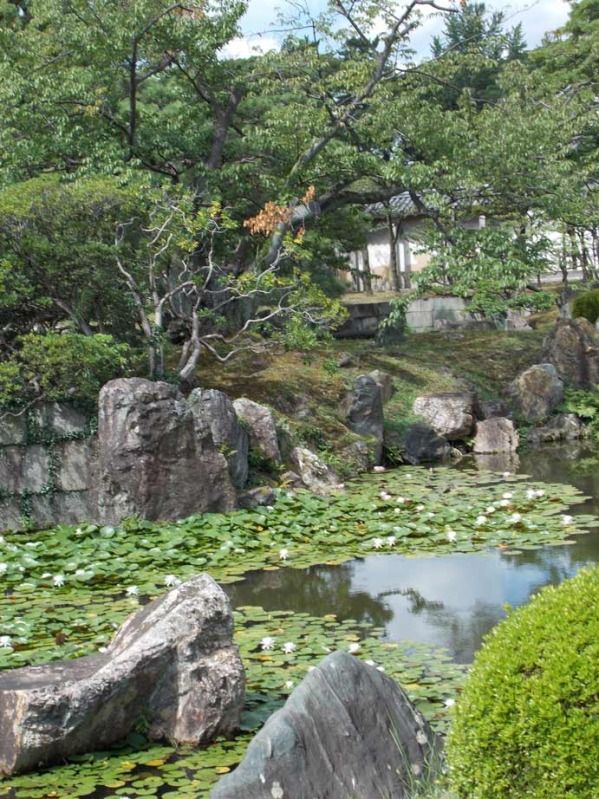
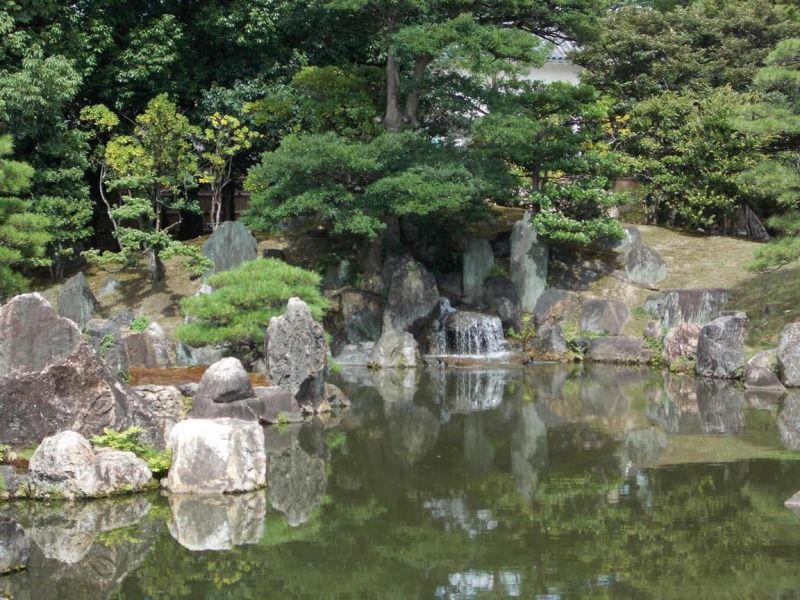
The rest of the grounds are a wonderful place to stroll, the gardens are unique because they are designed to be viewed from specific vantage points within the various palaces and structures on the grounds.
Not surprisingly, a good deal of the old castle is gone. Along with the old tower (as mentioned above, in 1750), there was also the inner palace, the Honmaru, which burned in 1788. On its site today is the Katsura Imperial Family Palace, moved from the Imperial Palace grounds to Nijo's central keep in 1893.
In the end, Nijo Castle's importance lies not so much in the fact that it was particularly central to any battles, but in that it is a symbol of its times. It marked the end of a one era and the beginning of the premodern era. The new leaders of Japan, no longer tied to the old Imperial structure and anxious to separate themselves from that old order, would officially move their seat of power to Edo (modern Tokyo), giving the name to the era of the Tokugawa Shoguns. It would mark the beginning of a time so reactive to the previous instability that there began a period of almost fanatical devotion to enforced stability. It was the coming era after the construction of the Castle that conspicuous displays of wealth and power were viewed as threats, likely where the Japanese notion of "inside" and "outside" behaviors still seen in modern Japan have their origins. The desire for stability also marked the beginning of the time of increased fears of foreign influence, leading to the xenophobia and suspicion that caused the expulsion of foreigners, the attempts to eradicate foreign influences like Christianity, and a general shuttering of the country. Though nearly forgotten and allowed to fall into disrepair over the years, the Castle maintained at least a symbolic connection to the Tokugawa of the Edo period, and that symbolic connection would resurface at the end of that era, as well. In 1863 Iemochi, the 14th and next to last Tokugawa Shogun, escaping the strife in Edo in the wake of the events following Commodore Perry's visit, would be the first Shogun to enter the Castle since the 3rd, Iemitsu, had last been there 230 years earlier. Four years later, Iemochi's son, Yoshinobu would officially hand power back to the Imperial throne from the old Ninomaru palace in Nijo Castle where 250 years earlier the 2nd Tokugawa Shogun had taken it away, thus marking the beginning of the Meiji Restoration.